# Stealth Money

[Stealth Money](https://www.stealth.money) is a Bitcoin-only service provider. We passionately offer this service because the biggest risk this century is not owning some Bitcoin in self-custody or institutional-grade custody.&#x20;

Over the decades we have seen the values of our local currencies evaporate, we have witnessed our parents lose their savings and pensions. Bitcoin has emerged as a superior saving asset and digital currency.

Bitcoin has fundamental features like a fixed, limited supply which makes it deflationary. It is censorship resistant which means your Bitcoin can't be frozen like a bank account. Bitcoin is also a decentralised monetary network as no central authority can control it.

All these features make Bitcoin an innovation on money and an ideal hedge against perpetual currency devaluation and inflation. This is why Stealth Money has built this platform which provides a simple way to accumulate Bitcoin. But to fully understand Bitcoin you must understand money.

**Stealth Money Value Proposition**

* Simplified Bitcoin education
* Simplifying and promoting Bitcoin self-custody
* Encouraging a culture of saving in Bitcoin
* Hedge against currency devaluation & inflation
* Long term wealth building mentality


# Money

Money, in its simplest form, is a tool that facilitates the exchange of goods and services. It acts as a universally accepted **medium of exchange** that allows us to buy a loaf of bread, book a holiday, or even purchase a house.

Money has other functions like being a **store of value**, people can hold on to it for the future and expect it to maintain its value and even grow.

Another function Money has is **unit of account** so like a measure of valu&#x65;**,** Money allows us to state wealth in terms of a monetary unit rather than the goods owned or produced. For example the average price of a three bedroom house in Accra may be in the $300,000 range, while in Lome it is in the $200,000 range. It is easier to make value comparisons with money than with say number of cows or kilos of silver.


# What is Money

Money is at the core of our existence, historically money has served three purposes and functions;&#x20;

1: a store of value,&#x20;

2: a medium of exchange, and&#x20;

3: a unit of account.

Money is considered a store of value, where it can be used as a means of saving and allocating capital for future use.

Money acts as a medium of exchange, facilitating trade and economic activity. Money is something everyone is willing to accept in exchange for goods and services.

Money is a unit of account. A unit of account is something that can be used to value goods and services, record debts, and make calculations.

Over the centuries there have been different forms of money from cowries to metals to coins and paper-printed money known as Fiat.&#x20;

Fiat money is government-issued currency that is not backed by a physical commodity but by the stability of the issuing government. Your local currency you use daily is known as fiat money

Money has evolved over the last millennia and we are in the digital phase. Bitcoin could be though of as primarily an innovation on money, an alternative form of money, a better form of money according to bitcoiners.

<figure><img src="https://1384244731-files.gitbook.io/~/files/v0/b/gitbook-x-prod.appspot.com/o/spaces%2Fjb15X4aYKIenge1e4ymo%2Fuploads%2Fo993elbe5QQfoEtwltxq%2FScreen%20Shot%202024-05-20%20at%2010.24.23%20PM.png?alt=media&amp;token=137bd5b0-573d-47a2-a8db-d127eb9d321e" alt=""><figcaption><p>Different Currencies</p></figcaption></figure>

### What Is the Difference Between Money and Currency?

Money and currency often seem interchangeable, but they hold unique roles in the economic system. Think of money as a concept: it's a medium of exchange that allows us to purchase goods and services without needing to swap items directly. On the other hand, currency is a physical representation of money, like coins and bills, that a government has declared legal tender.

In the next chapter we dive into the history of money, you see money is as old as humanity, it is fundamental to our lives and living.

<br>


# History of Money

<figure><img src="https://1384244731-files.gitbook.io/~/files/v0/b/gitbook-x-prod.appspot.com/o/spaces%2Fjb15X4aYKIenge1e4ymo%2Fuploads%2FRamyIdXkaGtTjD3V3VXb%2FHistory%20of%20money.png?alt=media&amp;token=428b9e47-a44e-4d1c-9968-afc4835287e5" alt=""><figcaption></figcaption></figure>

## Short History of Money

Money has been part of human history for at least the past 5,000 years in some form or another. Before that time, historians generally agree that a system of bartering was used. Bartering is a direct trade of goods and services. After bartering was phased out, the different forms of money evolved like cowrie shells, metals, coins, paper money etc.&#x20;

The first standardized metal coin was created in China sometime around 640 BCE. Hundreds of years later coins were replaced by paper money, The Chinese moved from coins to paper money around 1260 CE. Parts of Europe still used metal coins as their sole form of currency until the 16th century. Paper money(fiat) is referred to as currency issued by the central bank of a country.

### The Gold Standard <a href="#mntl-sc-block_39-0" id="mntl-sc-block_39-0"></a>

The Gold standard was a period where the world used the amount of gold stored in your reserves to determine the value of currencies.&#x20;

The Gold standard was established in the late 1800s, from 1870s to the early 1920s, was paused and from the late 1920s to 1932, as well as from 1944 until 1971. Under this rule, currency printing was permitted based on the amount of gold a country had in its reserves. The gold standard is a monetary system in which the value of a country's currency is directly linked to its gold reserves. This monetary system lasted until it was modified after World War II in 1944 in favour of the US Dollar.&#x20;

The Bretton Woods Agreement established a system under which gold was the basis for the US Dollar and other currencies were pegged to the US Dollar value. The agreement involved representatives from 44 nations and brought about the creation of the International Monetary Fund (IMF) and the World Bank.&#x20;

This system was abruptly suspended on August 15, 1971 by US president Nixon with a reintroduction of the fiat standard. This action was known as the Nixon shock and marked the period where Nixon took the US and essentially the world off the gold standard and back to the fiat system which gave the US Dollar global currency status.

### What is Fiat Money? <a href="#mntl-sc-block_39-0" id="mntl-sc-block_39-0"></a>

Fiat money (or fiat currency) is government-issued currency which is not backed by traditional forms of value or commodities like gold or silver. It is backed by the strength of the economy of the issuing Government. This makes fiat money inflationary by design since it is not backed by any commodity and created at will.

Fiat currency could be viewed as “monetary colonization” as one country's money and monetary policies, the United States (in some cases France for the Francophone nations), is the main influencer of other countries globally. You may have noticed this when you observe that global currencies are often compared to the US Dollar, GDP value quoted in USD, commodities values in USD etc. This highlights the global reach of the US Dollar's dominance.

The history of money is still being written. The system of exchange has moved from swapping animal skins to minting coins to printing paper money, and today, we appear to be on the cusp of a massive shift to electronic transactions with central bank digital currencies and decentralised money like Bitcoin.&#x20;

In the below infographic, it gives a well-detailed breakdown of the history and evolution of money.

<figure><img src="https://1384244731-files.gitbook.io/~/files/v0/b/gitbook-x-prod.appspot.com/o/spaces%2Fjb15X4aYKIenge1e4ymo%2Fuploads%2FD3BB5wGqkRYmH3pvGfXZ%2Fhistory-of-money.jpeg?alt=media&amp;token=9eb4d09a-00b1-41b2-a65f-72dcde87a692" alt="" width="563"><figcaption></figcaption></figure>

<br>


# Inflation & Devaluation

*Devaluation is also referred to as currency depreciation or currency debasement.*

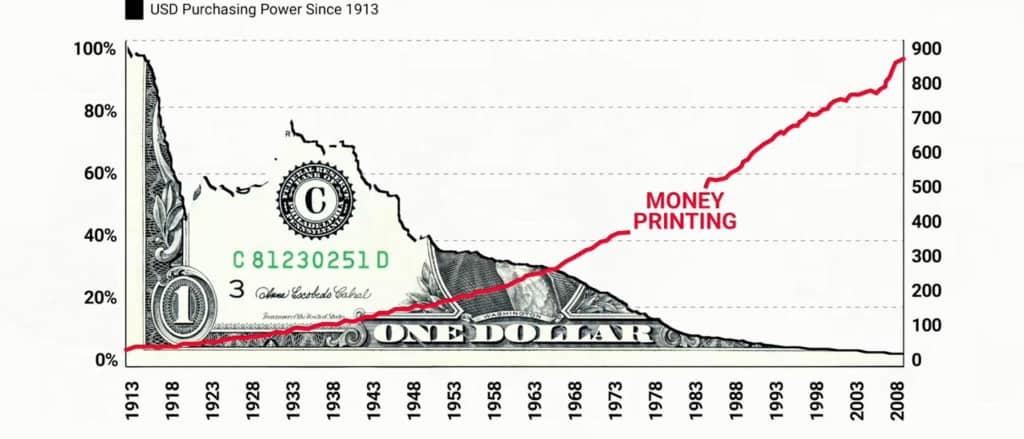
There are 195 recognised countries in the world according to the United Nations, each and everyone has experienced inflation and depreciation of their currency over the decades. The US Dollar for instance **has lost over 90% of its value in the past 100 years**. The Nigerian Naira was equivalent to $1 in 1985 ($1=N1 average range in 1985), it is now over N1000 to the $.&#x20;

*Your groceries are not becoming more expensive, your money is becoming less valuable.*

You have personally experienced the price of groceries and household items being way higher than it was a few years ago, that is inflation. In most developing nations, the value of their currencies is much less than it was a decade ago and it is never going back to those figures (that's devaluation).&#x20;

From the Ghanaian Cedi to the Turkish Lira to Ethiopian Birr to Nigerian Naira, to the Egyptian Pound, we have seen currencies lose so much value against the US Dollar over the decades. As the US goes through inflation, currencies in developing countries also go through intense devaluation combined with inflation (double trouble)😭

<figure><img src="https://1384244731-files.gitbook.io/~/files/v0/b/gitbook-x-prod.appspot.com/o/spaces%2Fjb15X4aYKIenge1e4ymo%2Fuploads%2Fo0wl8hRkRxAWG5LKnFo5%2FWhatsApp%20Image%202024-05-15%20at%2012.43.32%20PM.jpeg?alt=media&amp;token=8e1c68f2-1388-4952-8109-355480757d23" alt=""><figcaption><p>US Dollar depreciation in last 100 years</p></figcaption></figure>

<figure><img src="https://1384244731-files.gitbook.io/~/files/v0/b/gitbook-x-prod.appspot.com/o/spaces%2Fjb15X4aYKIenge1e4ymo%2Fuploads%2FNOE00o7MGU7Tn3T33GcN%2FEuro.jpeg?alt=media&amp;token=55768286-3324-464f-80f2-6c18d9c102fb" alt=""><figcaption><p>Euro 40% depreciation since creation</p></figcaption></figure>

## USD Dominance

The US Dollar is the global reserve currency, the world trades with the US Dollar making it the official currency for commerce as well the savings account for countries.&#x20;

When the US (central bank) increases their money supply (like stimulus package during Covid or bailouts of banks during financial crisis in 2008), this results in inflation all over the world and subsequent devaluation of most currencies. This leads to double jeopardy for those in developing and emerging nations (most of the world). Their citizens are getting poorer over time because the value of their earnings and savings is reducing based on economic forces that they have nothing to do with or can control.&#x20;

Billions of people globally are losing their wages, savings, pensions, and experiencing destruction of their purchasing power. The stories of Lebanon, Argentina are becoming more relatable as many around the world experience the rapid depreciation of their purchasing power. In our lifetime it is projected we will experience atleast one economic crisis and since we have witnessed one within the last couple decades, we probably will witness another in our lifetime😭😭.

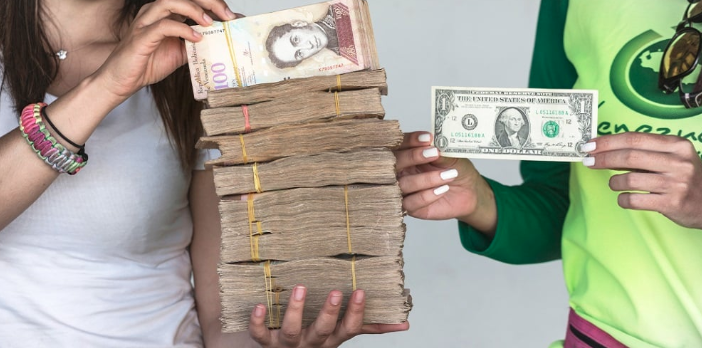
<figure><img src="https://1384244731-files.gitbook.io/~/files/v0/b/gitbook-x-prod.appspot.com/o/spaces%2Fjb15X4aYKIenge1e4ymo%2Fuploads%2FE3eBpj3VG5Ak58RVxuot%2FBolivar.png?alt=media&amp;token=89fcb283-2c29-46a5-a049-0567fb78b054" alt=""><figcaption><p>$1 equivalent in Venezuelan currency in 2018</p></figcaption></figure>

The average Nigerian millennial has seen the Naira lose 90% of its value in their lifetime. The endless devaluation of most currencies means folks are getting poorer over time while earning and saving in their local currencies. It is also lost on many that currency depreciation and inflation is devaluation of your labour, debasement of your hard work over the years. Think of it like **same job, lesser pay**, or paying more for the same medicine than from three years ago.&#x20;

Inflation & devaluation directly impact your quality of life and the higher inflation/devaluation, the lower quality of living for you and your household. They are like the silent, invincible thieves.&#x20;

## The Bottom Line

While there are a few economic factors that cause inflation, the main driver is the excessive money printing of Governments combined with their high debt levels and budget deficits. There are other factors that contribute to shorter-term inflation like trade wars, conflict, climate change, supply chain disruption.&#x20;

For centuries Gold has been used as a hedge against economic crisis, persistent inflation and currency debasement. This is why countries buy and store gold as part of their reserves alongside US Dollar.

El Salvador a country in Central America became the first sovereign nation to buy and accumulate Bitcoin as a treasury asset in September 2021. Donald Trump in his second term as US President signed an[ executive order for the establishment of a strategic bitcoin reserve](https://www.whitehouse.gov/presidential-actions/2025/03/establishment-of-the-strategic-bitcoin-reserve-and-united-states-digital-asset-stockpile/). The US is currently the largest holder (as a country) of Bitcoin that it kept from seizures in the past. This indicates that while the world has mainly used gold as a hedge, bitcoin may emerge as an alternative reserve asset to protect against inflation and devaluation used by both countries and individuals.&#x20;

&#x20;

<br>


# How is Fiat Money created

What is **fiat money**?

Fiat money is paper money created and issued by a Government (central bank) backed by the stability of its economy. The supply process of fiat money is effected through monetary policy.

What is **monetary policy**?

Monetary policy is how central banks influence the economy by raising or lowering the money supply in circulation. Too much money printed in supply leads to multi-year runaway inflation, too little supply can lead to recession where businesses close down and many jobs lost en masse. The main goal of central bankers is to maintain a balance by enabling maximum employment while keeping prices stable.

<figure><img src="https://1384244731-files.gitbook.io/~/files/v0/b/gitbook-x-prod.appspot.com/o/spaces%2Fjb15X4aYKIenge1e4ymo%2Fuploads%2FCw08lu6RL9BVBaWRmgii%2FScreen%20Shot%202024-05-21%20at%201.57.27%20PM.png?alt=media&amp;token=975f8bed-1566-49f1-99b0-4592ccf81e7a" alt=""><figcaption><p>Freshly printed fiat money</p></figcaption></figure>

**Fiat money** gives central banks greater control over the economy because they can control how much money is printed. One danger of fiat money is that governments can print too much of it, resulting in hyperinflation like what happened in Venezuela and Zimbabwe.

The role of money creation is assigned to the central bank of each country. In America they call their central bank the Federal Reserve (aka the Fed), in most countries it is called the central bank.  The Federal Reserve, as America's central bank, is responsible for controlling the supply of U.S. Dollars in circulation.

Now remember we just explained how the global currency is the US Dollar because the whole world trades with it. For example when Saudi Arabia sells their oil exports, the prices are quoted in US Dollars and paid in USD. The same applies for every other commodity and large-scale business transactions. This makes the US and its central bank (the Fed) the most influential economic institution in the world.

Money is power so if the world transacts with your currency, that gives you unrivaled influence and dominance, in other words if the United States sneezes, the rest of the world catches a cold. The US central bank is indirectly responsible for inflationary pressures globally based on its monetary policy. If the US monetary policy is expansionary it leads to higher levels of inflation in America and the rest of the world. If the US monetary policy is contractionary, it tackles inflation by reducing the money supply which could lead to recession. The more money printed by a Government consequently leads to inflation and loss of purchasing power, the central bank responsibility is to maintain a balance.&#x20;

When interest rates go up, it becomes more expensive to borrow and that means less spending, less demand, the economy cools and inflations comes down but at the risk of a recession. Central banks can reverse this by cutting interest rates, making it cheaper to borrow which increases demand, and creates many more jobs stimulating the economy.

<figure><img src="https://1384244731-files.gitbook.io/~/files/v0/b/gitbook-x-prod.appspot.com/o/spaces%2Fjb15X4aYKIenge1e4ymo%2Fuploads%2FAY8G5f0bWjy0KYm4U0HA%2FPeso.png?alt=media&amp;token=3514804a-0605-40d8-8ab9-7f10b6236343" alt=""><figcaption></figcaption></figure>

## Difference between expansionary and contractionary monetary policy.

Expansionary monetary policy (aka quantitative easing) is when a central bank increases the money supply which fights recessions and increases economic growth. Contractionary economic policy (aka quantitative tightening) pulls money out of the economy in order to fight inflation by mopping up the excess liquidity.

While central banks are meant to be independent and free of Government interference or persuasion, historically they always get entangled eventually. The politicians and their backers have elections to win, and voters will not be voting for you or your party when there is runaway inflation, there's also the aspect of systemic corruption.&#x20;

All these factors have led to a rigged system at the expense of the masses. A scenario where the rich get richer and everyone else has to manage. Taxes get higher for the masses but the wealthy can employ tax avoidance. Persistent inflation which affects the poor the most, while cheap bank loans for the rich who can afford to be financially flexible, all while quality of life and living for the poor drops.

This is what happens where politics & governance is not separated from money policies.&#x20;

The African nation of Zimbabwe provided an example of the worst-case scenario in the early 2000s. In response to serious economic problems, the country's central bank began to print money at a staggering pace, resulting in hyperinflation.

Experts suggest the currency lost 99.9% of its value during this time. Prices rose rapidly and consumers carried bags full of money just to purchase basic staples like bread. At the height of the crisis, the government of Zimbabwe was forced to issue a 100-trillion Zimbabwean dollar note.

<figure><img src="https://1384244731-files.gitbook.io/~/files/v0/b/gitbook-x-prod.appspot.com/o/spaces%2Fjb15X4aYKIenge1e4ymo%2Fuploads%2F4cHu45GAjFMVlv6ZKLeo%2FScreen%20Shot%202024-06-08%20at%209.22.19%20AM.png?alt=media&amp;token=0d78e704-2ef5-4f15-a95a-57fc8484319d" alt=""><figcaption></figcaption></figure>

### In Summary <a href="#mntl-sc-block_58-0" id="mntl-sc-block_58-0"></a>

Fiat money gives central banks greater control over the economy because they can control how much money is printed. One danger of fiat money is that governments can print too much of it, resulting in hyperinflation. It is the duty of the central bank of every country through its central bank to maintain a balance through its monetary policy while the Government plays its part with fiscal policy (public spending, tax revenues, exports, foreign reserves etc). However due to politics as well politricks, we have a fiat/central banking system that benefits those at the top creating an unfair, somewhat rigged monetary dispensation.


# Bitcoin

*Bitcoin* (₿) is an innovation on money; it is a decentralized digital asset and currency.&#x20;

Bitcoin spans many traditional assets, such as cash and gold. For example, you can use it as a currency to transact across borders or as a store of value for long-term savings.

Bitcoin monetary network is touted as separation of Money and the State (since supply is not determined by a government or politics).


# What is Blockchain

<mark style="color:yellow;">Blockchain</mark> is a digital database or ledger that is distributed among computers in a peer to peer network. A blockchain is the foundational data structure behind Bitcoin.

A blockchain is a list of records called blocks. Each of these blocks contains data—in Bitcoin’s case, each block contains transactions, representing transfers of bitcoin from one user to another.

The blockchain can be thought of as a digital ledger that keeps track of every account on the network. The entire blockchain is the book that stores the record of every transaction that has ever taken place on the network between its accounts. Each block, then, is like a new page added to the ledger to update the state of accounts on the network.

### How Does a Blockchain Work?

You might be familiar with spreadsheets or databases. A blockchain is somewhat similar because it is a database where information is entered and stored. But the key difference between a traditional database or spreadsheet and a blockchain is how the data is structured and accessed.

### Blockchain Transparency <a href="#mntl-sc-block_41-0" id="mntl-sc-block_41-0"></a>

Because of the decentralized nature of the Bitcoin blockchain, all transactions can be transparently viewed by downloading and inspecting them or by using [blockchain explorers](https://www.blockchain.com/explorer?utm_campaign=dcomnav_explorer) that allow anyone to see transactions occurring live. Each node has its own copy of the chain that gets updated as fresh blocks are confirmed and added. This means that if you wanted to, you could track a bitcoin wherever it goes.&#x20;

### Blockchain Decentralization <a href="#mntl-sc-block_36-0" id="mntl-sc-block_36-0"></a>

A blockchain allows the data in a database to be spread out among several network nodes—computers or devices running software for the blockchain—at various locations. This not only creates redundancy but maintains the fidelity of the data. For example, if someone tries to alter a record at one instance of the database, the other nodes would prevent it from happening because they compare block hashes. This way, no single node within the network can alter information within the chain.

### Summary

* Blockchain is a type of shared database that differs from a typical database in the way it stores information; blockchains store data in blocks linked together via cryptography.
* Different types of information can be stored on a blockchain, but the most common use for transactions has been as a ledger.&#x20;
* In Bitcoin’s case, the blockchain is decentralized, so no single person or group has control—instead, all users collectively retain control.
* Decentralized blockchains are immutable, which means that the data entered is irreversible. For Bitcoin, transactions are permanently recorded and viewable to anyone.

<br>


# What is Bitcoin

> <mark style="color:orange;">**Bitcoin is money**</mark>

## Bitcoin explained in 1 minute

Bitcoin is a digital currency (medium of exchange) and a limited supply asset (store of value) at the same time. It is a currency because you can send it as value to another person or use it to pay for goods and services. It is an asset because it has a fixed, limited supply which cannot be controlled or manipulated. This programmable money which cannot be altered also ensures that the supply of bitcoin is fixed and can never be more than 21 million bitcoin.

Bitcoin is a financial invention and innovation that is designed to create financial freedom, freedom to send & receive value, and freedom to store value in a censorship-resistant way. Bitcoin emerged from the ashes of the global financial crisis in 2008 when a group of anonymous coders (referred to as Satoshi Nakamoto) created a monetary network that would not be centrally controlled by any Government or institution. This is made possible through the decentralised technology of the bitcoin blockchain.&#x20;

<figure><img src="https://1384244731-files.gitbook.io/~/files/v0/b/gitbook-x-prod.appspot.com/o/spaces%2Fjb15X4aYKIenge1e4ymo%2Fuploads%2FbPRwFQ6kagCn5EDimFkV%2FBitcoin-1.png?alt=media&amp;token=7e741826-a29b-4e1e-ae99-c0a14b0da43f" alt=""><figcaption></figcaption></figure>

Bitcoin is created through something called proof of work consensus, a mining mechanism where powerful computer networks all around the world spend energy solving complex mathematical problems to secure and validate the system. At this point you are probably getting a bit overwhelmed so to simplify, Bitcoin is not created from thin air but through a process called mining (millions of computers around the world). There will only ever be 21 million Bitcoins, we dive deeper in [How Bitcoin is created.](/bitcoin/how-is-bitcoin-created)

The decentralized nature of Bitcoin also eliminates the potential for a single point of control or supply manipulation, making it more resilient than traditional currencies.&#x20;

"Sats" is short for "satoshis", which is the smallest unit of Bitcoin. It's named after Satoshi Nakamoto, the pseudonymous person or group of people who developed Bitcoin. One Bitcoin (BTC) is equivalent to 100 million Satoshis. Sats is to Bitcoin what kobo is to the Naira, pesewa is the Cedi, or cents is to the Dollar.&#x20;

## What are Sats?

"Sats" is short for "satoshis", which is the smallest unit of Bitcoin. It's named after Satoshi Nakamoto, the pseudonymous person or group of people who developed Bitcoin. One Bitcoin (BTC) is equivalent to 100 million Satoshis. Sats is to Bitcoin what kobo is to the Naira, or cents is to the Dollar. 7

\
For instance, instead of saying "0.00005 BTC", you could say "5,000 sats.

1,000 Sats is still 1,000 sats, the same way 1 BTC is still 1 BTC next year and beyond.

<figure><img src="https://1384244731-files.gitbook.io/~/files/v0/b/gitbook-x-prod.appspot.com/o/spaces%2Fjb15X4aYKIenge1e4ymo%2Fuploads%2FD6p6jiQDCbzs5TRlKqG7%2Fsats.png?alt=media&amp;token=ce735833-7320-43d9-8f05-5f4292d7b62f" alt=""><figcaption></figcaption></figure>

<br>


# Features of Bitcoin

Here are the core features that make Bitcoin a unique asset class with no second best.

**Decentralised:** Bitcoin’s blockchain is distributed. It is stored and maintained on hundreds of thousands of computers around the world, rather than in one centralized location. In other words, decentralization acts as a checks and balances system before blocks are added to the chain. The decentralized bitcoin network is a core feature that makes Bitcoin unique.

**Permissionless:** Bitcoin doesn’t require any third parties and can be sent and received simply via software that’s run on any computer, it’s incredibly difficult for anyone to “ban” or stop it. Bitcoin is also trustless because the system was designed so that nobody has to trust anybody else in order for the system to function.

**Censorship Resistant:** Bitcoin held in self-custody cannot be seized by any Government or financial institution, unlike bank accounts which can be frozen at anytime. To stop a Bitcoin transaction a government effectively has to stop the Internet or go into an individuals home using physical force making it highly resistant to censorship.

**Transparent:** Bitcoin transactions are recorded on the public ledger blockchain. The transactions are permanently viewable, which gives transparency to the system but they are secure and fraud-resistant at the same time due to blockchain technology. Bitcoin supply rate is transparent and can be viewed in real-time.

**Divisible:** Bitcoin is easily divisible, You can divide one bitcoin into 100 million pieces (100 million sats), whereas 1 US dollar can be broken into 100 pieces (100 cents). This means that the world will never “run out" of Bitcoin. It can always be divided into smaller and smaller pieces.

**Immutable:** Every transaction on the Bitcoin network is stored on a block that is linked to a previous block of transactions. This blockchain technology is immutable, which means no entity can erase or alter any information on the network. Transactions on Bitcoin are verified by network nodes through cryptography and recorded in blockchain (which is essentially a public ledger).

Immutability makes the network reliable and trustworthy. It sets it apart from all other asset classes where a lack of transparency, forgery, or corruption could pose a risk to the investor.

**Fixed Supply:** Bitcoin: ​​Bitcoin’s maximum supply of 21 million is also due to the mathematical rules set in the code. This limit is hardcoded into the protocol, meaning it cannot be changed by anyone, including the developers or miners. The maximum supply of 21 million bitcoins will be reached around the year 2140, after which no new bitcoins can be mined or created.

<figure><img src="https://1384244731-files.gitbook.io/~/files/v0/b/gitbook-x-prod.appspot.com/o/spaces%2Fjb15X4aYKIenge1e4ymo%2Fuploads%2FRabkaYoY9lZITOIlSXD8%2FBTC%20Supply.jpeg?alt=media&amp;token=b17c3213-5166-46a7-ad32-50f0942d7ab4" alt=""><figcaption><p>Bitcoin fixed supply mechanism.</p></figcaption></figure>

<br>


# How is Bitcoin created

<figure><img src="https://1384244731-files.gitbook.io/~/files/v0/b/gitbook-x-prod.appspot.com/o/spaces%2Fjb15X4aYKIenge1e4ymo%2Fuploads%2FZV6zZ3UVkL0jA6NzWWOL%2Fbitcoin%20mining%20farm.png?alt=media&amp;token=88c03d9e-ac10-419c-95a7-440386ffce37" alt=""><figcaption><p>A bitcoin mining farm.</p></figcaption></figure>

## Bitcoin Mining

Bitcoin is produced through proof of work mining consensus. This process is called mining because, like mining minerals, it is an intensive process that takes alot of energy and electricity. In other words, no one is able to print free money in Bitcoin because of the significant energy and electricity consumption required.

Bitcoin mining is the process where new bitcoin is created and entered into circulation. Mining is one of the core components that secure the bitcoin blockchain. It involves using specialized hardware, called ASICs, to perform millions of calculations per second to solve a computational puzzle. When a bitcoin is successfully mined, the miner receives a predetermined amount of bitcoin. Bitcoin mining is immensely energy intensive and consumes alot of electricity, cooling system and computing power.&#x20;

Bitcoin runs on a decentralized computer network or distributed ledger that verifies, validates and secure the network. When computers on the network verify and process transactions, new bitcoins are created or mined. These networked computers, or miners, process the transaction in exchange for a payment in Bitcoin. It is easy to think that Bitcoin is created out of thin air, however a Bitcoin is created after heavy use of electricity and computing power.&#x20;

These computers power the process called proof-of-work mining. Rather than relying on a central bank or governmental agency, Bitcoin is created, maintained, and guarded by watchdogs around the world known as miners, who prevent tampering through a complex cryptographic process and are rewarded with bitcoin for doing so.

This decentralized form of monetary network however requires an immense and ever-increasing amount of electricity, powerful computing power and cooling system. This is why there has been complaints about the energy use in Bitcoin mining and the negative impact on the environment as well nearby community due to the noise of the hardware. The Bitcoin mining industry have worked towards ensuring more than [50% of all energy used in Bitcoin mining](https://charltonsquantum.com/bitcoin-mining-achieves-all-time-high-of-54-5-sustainable-energy-usage-in-2023/) is from **renewable and sustainable energy.**

## Bitcoin is backed by maths

Bitcoin is “backed by math” in the sense that the system depends entirely on mathematics and code, not on faith in an institution. The rules and processes are transparent, verifiable, and deterministic. Bitcoin fundamental properties, security, and operation are governed and secured by **mathematical principles and cryptographic algorithms.** Bitcoin's supply is mathematically capped at 21 million coins, this scarcity is **hardcoded into its protocol**. The rate at which new Bitcoins are introduced into the system (through mining) is also determined by a predictable mathematical formula, which halves approximately every four years (the "halving" event). This predictable and diminishing supply is designed to combat inflation, unlike traditional fiat currencies where governments can print more money at will.

<figure><img src="https://1384244731-files.gitbook.io/~/files/v0/b/gitbook-x-prod.appspot.com/o/spaces%2Fjb15X4aYKIenge1e4ymo%2Fuploads%2Fz3M08pvZnOw57wTmjU8g%2F20250611_084207.jpg?alt=media&amp;token=62657179-33db-4a8a-a0f6-5435a38f4ff0" alt=""><figcaption></figcaption></figure>

## What is Bitcoin Halving?

The halving is an event which reduces the issuance rate of bitcoin by half every four years. Bitcoin’s issuance schedule is precisely defined by an algorithm in Bitcoin’s code. This algorithm allows a certain amount of new bitcoin to be minted in each block, as compensation for the miner of the block.

This new bitcoin is called the block subsidy, and at Bitcoin’s inception, it was 50 BTC per block. However, the subsidy is cut in half in an event called the halving, which takes place every 210,000 blocks—roughly every four years.

<figure><img src="https://1384244731-files.gitbook.io/~/files/v0/b/gitbook-x-prod.appspot.com/o/spaces%2Fjb15X4aYKIenge1e4ymo%2Fuploads%2FPEXEgue1hYnuhTl4MSjt%2Fbtc%20mining.jpg?alt=media&amp;token=4c62f672-c01e-4888-9158-c886452adf3e" alt=""><figcaption></figcaption></figure>

### Can the Bitcoin network be shutdown or hacked?

Shutting down the Bitcoin network would require shutting down the entire global internet and cutting all electricity. To stop bitcoin, every Government in the world will have to successfully coordinate simultaneously to shut down the entire internet everywhere and then keep it off forever. Even in that improbable scenario, the Bitcoin network can be communicated over radio signals.

While it’s technically possible to “hack" or take over the entire Bitcoin network, doing so would cost billions of dollars and require a massive coordinated effort involving global chip manufacturers. This makes the probability of this happening unrealistic and near impossible as there is no monetary gain from hacking the network, rather billions and billions of dollars will be spent.

The bitcoin network has an uptime of 99.9% with no downtime in the last decade. You can verify here anytime at <https://bitcoinuptime.com/>

<br>


# Why does Bitcoin have value

Bitcoin has a unique set of features that are not found in any other form of money. Arguably the defining feature of Bitcoin differentiating it from other forms of currency is its mathematical scarcity and full total decentralisation.

Unlike traditional fiat currencies with an unlimited supply that is adjusted at the whim of central banks and Governments. Bitcoin is the **only asset** in the universe that has a **fixed, limited supply** which **can not be altered**. This makes Bitcoin an ideal hedge against inflation & devaluation because its scarcity makes it deflationary.

<figure><img src="https://1384244731-files.gitbook.io/~/files/v0/b/gitbook-x-prod.appspot.com/o/spaces%2Fjb15X4aYKIenge1e4ymo%2Fuploads%2FbPRwFQ6kagCn5EDimFkV%2FBitcoin-1.png?alt=media&amp;token=7e741826-a29b-4e1e-ae99-c0a14b0da43f" alt=""><figcaption></figcaption></figure>

## Bitcoin Fundamentals

Bitcoin’s creator(s) Satoshi Nakamoto intentionally limited the **lifetime supply** of Bitcoin to **21 million** coins through the algorithm built into the Bitcoin network. This code cannot be altered, it is therefore incorruptible.

This group of anonymous coders under the name Satoshi Nakamoto made the Bitcoin protocol open-source and handed it over to distributed networks (hundred of thousands) around the world. This is what makes Bitcoin fully and truly decentralised adding to its core value proposition.&#x20;

There is no CEO, no hierarchy, no marketing department, no owner or central authority or any institution that can manipulate its supply. Bitcoin is incorruptible in a corrupt world, and a deflationary asset in a financial system that is inflationary by design.

And we can't end without talking about Bitcoin main value proposition which is financial sovereignty and freedom. In an ever increasing mass-surveillance system, Bitcoin is freedom money and hope in a world of surveillance states and censorship.

<figure><img src="https://1384244731-files.gitbook.io/~/files/v0/b/gitbook-x-prod.appspot.com/o/spaces%2Fjb15X4aYKIenge1e4ymo%2Fuploads%2FxHa5CX712i0vA0f60Tg1%2Fbtc.jpeg?alt=media&amp;token=a1301fad-7486-48b9-91eb-91e103e5d6ea" alt=""><figcaption></figcaption></figure>

To further illustrate Bitcoin core value proposition, think of China where your ability to make a payment is based on the Government approving through a scoring system, that is money being used as a form of control.

Governments have used money as a form of censorship like in Canada, where truck drivers bank accounts were frozen for protesting against mandatory covid vaccines. In Iran and India your bank account can be frozen for being an opposition supporter. In Kenya and Nigeria, we have seen accounts being blocked for protesting civil rights.

## Conclusion

The financial system is often weaponised by Governments and institutions but Bitcoin is censorship-resistant and permissionless. Bitcoin is not just code, it’s a quiet revolution.\
It’s a candle lit in the darkness of debt traps, currency devaluations, rigged systems, financial censorship and extractive politics.

Bitcoin is a monetary asset that is free, fair and unbiased by design. No authority, institution or Government can control Bitcoin and this is a priceless feature when you think of it deeply.

<figure><img src="https://1384244731-files.gitbook.io/~/files/v0/b/gitbook-x-prod.appspot.com/o/spaces%2Fjb15X4aYKIenge1e4ymo%2Fuploads%2FIWyVrW0VUKAN9hs1h8DU%2FGemini_Generated_Image_4k1rfr4k1rfr4k1r.png?alt=media&amp;token=115cefbc-e789-4f55-a879-db5c1a2e46e8" alt=""><figcaption></figcaption></figure>

<br>


# Bitcoin explained in 5 pics

**Let's breakdown Bitcoin in images, personally I understand things better with visuals. 😏**

**1:** The supply of fiat money(your local currency) is unlimited, Bitcoin is hard money because its supply is fixed and limited. There will only ever be 21 million bitcoin and this can  never ever be changed.

<figure><img src="https://1384244731-files.gitbook.io/~/files/v0/b/gitbook-x-prod.appspot.com/o/spaces%2Fjb15X4aYKIenge1e4ymo%2Fuploads%2FRYJPODnM8xl1zBvpVeK1%2FWhatsApp%20Image%202024-06-10%20at%209.25.00%20PM.jpeg?alt=media&amp;token=80e5d3ed-0e3a-4023-b235-3c6cb25dd6dc" alt=""><figcaption></figcaption></figure>

<figure><img src="https://1384244731-files.gitbook.io/~/files/v0/b/gitbook-x-prod.appspot.com/o/spaces%2Fjb15X4aYKIenge1e4ymo%2Fuploads%2FcfI7ysq7oQPfo2sTCqhz%2Fbtc%3A21.jpeg?alt=media&amp;token=7b952591-2894-435e-8a30-f492d8a45706" alt=""><figcaption></figcaption></figure>

**2:** The median prices of houses in America (and the rest of the world) continues to increase in fiat money($), and at the same time reduce in Bitcoin. Where would you rather save?🤔

<figure><img src="https://1384244731-files.gitbook.io/~/files/v0/b/gitbook-x-prod.appspot.com/o/spaces%2Fjb15X4aYKIenge1e4ymo%2Fuploads%2F93MC3TTOntH5GLgfqR0b%2Fbtc2.jpeg?alt=media&amp;token=b808f799-397f-4778-a271-e01423fe7dd2" alt=""><figcaption></figcaption></figure>

**3:** Bitcoin is in its own category as a fully decentralised digital asset and currency which means it has no central authority. Then there is Crypto in its own different category, which is thousands & thousands of tokens, altcoins, protocols and memecoins and etc etc.😌

<figure><img src="https://1384244731-files.gitbook.io/~/files/v0/b/gitbook-x-prod.appspot.com/o/spaces%2Fjb15X4aYKIenge1e4ymo%2Fuploads%2FWV1axa1e2KAKDz6OI16p%2Fbtc%20crypto.jpeg?alt=media&amp;token=a2ad119c-937a-433f-a92a-8a3f21ae241d" alt=""><figcaption></figcaption></figure>

**4:** For many centuries, Gold has been the hedge against sociopolitical & financial crisis, the protection or haven during an economic collapse or wars. Bitcoin is the digital gold of this century.

<figure><img src="https://1384244731-files.gitbook.io/~/files/v0/b/gitbook-x-prod.appspot.com/o/spaces%2Fjb15X4aYKIenge1e4ymo%2Fuploads%2FKMmRnh0Xyb3aDq407Jo9%2Fbtc4.png?alt=media&amp;token=9fd62e0f-3584-4593-9e8e-0721a37b1026" alt=""><figcaption></figcaption></figure>

**5:** Folks have lost access to their savings in the bank because their account got frozen in error or even worse because the bank [shutdown over night](https://www.cnbc.com/2023/03/10/silicon-valley-bank-collapse-how-it-happened.html). Bitcoin monetary network is incorruptible and permissionless.

<figure><img src="https://1384244731-files.gitbook.io/~/files/v0/b/gitbook-x-prod.appspot.com/o/spaces%2Fjb15X4aYKIenge1e4ymo%2Fuploads%2FlfR00YqUAReBd9qRUop9%2FFailed%20US%20banks.png?alt=media&amp;token=06dfdf00-595f-40dc-9225-54141efc74fc" alt=""><figcaption><p>Bet you forgot banks can fail.</p></figcaption></figure>

<figure><img src="https://1384244731-files.gitbook.io/~/files/v0/b/gitbook-x-prod.appspot.com/o/spaces%2Fjb15X4aYKIenge1e4ymo%2Fuploads%2FSwogEYjjlsh1IAfl4IbS%2Fbtc5.png?alt=media&amp;token=bab576ab-73e0-492a-9f4c-a537506621b0" alt="" width="498"><figcaption><p>Credits: @luchopolleti</p></figcaption></figure>

**Conclusion** (bonus meme):\
The global financial system is inflationary by design. You can either opt out by accumulating Bitcoin/Gold or watch your savings evaporate. 😎

<figure><img src="https://1384244731-files.gitbook.io/~/files/v0/b/gitbook-x-prod.appspot.com/o/spaces%2Fjb15X4aYKIenge1e4ymo%2Fuploads%2FtLngZDLzZUFTUA1SK7wY%2Fbtc7.png?alt=media&amp;token=3beb2487-e76c-4999-b0b1-23601efa5733" alt=""><figcaption></figcaption></figure>

<figure><img src="https://1384244731-files.gitbook.io/~/files/v0/b/gitbook-x-prod.appspot.com/o/spaces%2Fjb15X4aYKIenge1e4ymo%2Fuploads%2FinZf8bBSy1DKCRuJsSdu%2Fbtc3.png?alt=media&amp;token=9f59b331-3142-4972-ba54-88968b9908db" alt=""><figcaption><p>PLEASE ALWAYS REMEMBER !!!</p></figcaption></figure>


# Advanced

Bitcoin can be quite complex tbh, we break down the complicated stuff empowering you with the lifetime knowledge of the hardest asset ever created.


# Proof of Work

Proof of work is a blockchain consensus mechanism in which heavy computing power is used to verify bitcoin transactions and add them to the blockchain.

Proof of work (PoW) is a decentralized consensus mechanism that requires network members to expend effort in solving an encryption puzzle. It is also called mining, in reference to receiving a reward for work done.

Proof of work at scale requires vast amounts of energy, which only increases as more miners join the network.

The energy-intensive process involves using power-hungry computers to validate encrypted transactions on the Bitcoin blockchain, with rewards earned in the form of bitcoin.

<figure><img src="https://1384244731-files.gitbook.io/~/files/v0/b/gitbook-x-prod.appspot.com/o/spaces%2Fjb15X4aYKIenge1e4ymo%2Fuploads%2FZV6zZ3UVkL0jA6NzWWOL%2Fbitcoin%20mining%20farm.png?alt=media&amp;token=88c03d9e-ac10-419c-95a7-440386ffce37" alt=""><figcaption><p>Bitcoin Mining farm</p></figcaption></figure>

### Proof of Work vs. Proof of Stake <a href="#mntl-sc-block_39-0" id="mntl-sc-block_39-0"></a>

The two most popular consensus mechanisms are proof of work and proof of stake. While Bitcoin uses proof of work, Ethereum and the rest of altcoins use proof of stake. Proof of work is a superior mining mechanism in comparison with proof of stake.

### What Is the Difference Between Proof of Work and Proof of Stake?

PoW requires nodes on a network to provide evidence that they have expended computational power (i.e., work) to achieve consensus in a decentralized manner and to prevent bad actors from overtaking the network. Proof of stake requires collateral in the form of staked cryptocurrency to become a trusted participant.

Proof of work is one of the things that distinguish Bitcoin from the thousands of other crypto currencies.

### Conclusion

Decentralization is a solution to avoiding central authority flaws. Bitcoin is revolutionary in achieving a truly decentralized value transfer system, based on cryptology and economic incentive — new bitcoin and transaction fees paid to the miners. In return, miners invest in specialized hardware and spend a lot of electricity.


# Hardware Wallets

> *<mark style="color:orange;">**Not your keys, not your coins. You need a hardware wallet.**</mark>*

A hardware wallet, also known as a cold wallet, is a physical device created solely for offline storage of cryptocurrency private keys. Storing your bitcoin in a hardware wallet is also known as cold storage or self-custody.

A hardware wallet is a digital device whose sole purpose is to generate and store public & private keys and sign transactions. Hardware wallets allow users to send and receive Bitcoin in a secure fashion. Hardware wallets are a form of cold storage, meaning that they allow a user to keep their private keys safely disconnected from the internet. Some of the popular hardware wallets are Trezor, Bitkey by Block, Blockstream Jade, Bitbox etc. They usually look like a small USB stick and are often controlled using a web browser on your computer. Hardware wallets ensure that your private keys are kept offline, away from the reach of online threats like hackers, malware, and phishing attacks.

<figure><img src="https://1384244731-files.gitbook.io/~/files/v0/b/gitbook-x-prod.appspot.com/o/spaces%2Fjb15X4aYKIenge1e4ymo%2Fuploads%2FVngFIp54JnbSP2V7Pc4r%2Ftrezor%20btc.jpeg?alt=media&amp;token=ca9c3031-a820-4b93-a66d-24f0ec40367f" alt=""><figcaption></figcaption></figure>

**Help setting up wallets**

We have partnered with Trezor to ensure swift delivery of your hardware wallet device within days. You can watch simplified how-to-videos on our dashboard from our partner Trezor.  Additionally you can schedule a 1-on-1 onboarding session with us where we walk you through setting up your Trezor wallet. This service is offered for free by Stealth Money.

<br>


# What is Self Custody

> *<mark style="color:orange;">**You do not own your bitcoin unless it is in your self custody.**</mark>*

***The way Bitcoin is engineered you don't need to trust anyone else to secure your Bitcoin.***

An easy way to understand the concept of self custody is like this, let's say you have a gold coin worth alot of money (say $100,000 equivalent). How best will you safely secure this gold coin🤔. Will you trust someone else when you can personally store it securely?

The best way is to trust no one except yourself to securely hold this coin. You could keep it in a safe in a hard-to-find location or something similar but you should ideally not trust someone to hold it more securely because there is no guarantee they will, you can only hope and trust.

Folks have lost savings they had in banks that have collapsed, if banks which are in the business of securing funds have lost their customers money, how can anything else be trusted. With Bitcoin, it was engineered to be stored securely by the holder, this is what is referred to as self custody.

<figure><img src="https://1384244731-files.gitbook.io/~/files/v0/b/gitbook-x-prod.appspot.com/o/spaces%2Fjb15X4aYKIenge1e4ymo%2Fuploads%2FjxXjkMr2cVG85fXwWGEe%2Fledger.png?alt=media&amp;token=9f98bda6-d88e-4748-92dc-a4962af72711" alt=""><figcaption><p>Ledger Nano S Plus Hardware Wallet</p></figcaption></figure>

<figure><img src="https://1384244731-files.gitbook.io/~/files/v0/b/gitbook-x-prod.appspot.com/o/spaces%2Fjb15X4aYKIenge1e4ymo%2Fuploads%2FcAydCXoz3V8wJL18LHaR%2Ftrezor%20bitcoin.jpg?alt=media&amp;token=17ed597d-6a2f-472a-859d-fe6b53170214" alt=""><figcaption><p>Trezor Safe 5 Hardware Wallet</p></figcaption></figure>

<figure><img src="https://1384244731-files.gitbook.io/~/files/v0/b/gitbook-x-prod.appspot.com/o/spaces%2Fjb15X4aYKIenge1e4ymo%2Fuploads%2Fs6ovYZSE9g95MMn11el5%2Fbitkey.png?alt=media&amp;token=17a24690-e7fa-4385-b7ea-347dd2b444ed" alt=""><figcaption><p>Bitkey Hardware Wallet</p></figcaption></figure>

### Bitcoin + Self Custody

There is a popular saying among Bitcoiners which is **‘Not your keys not your coins’** which means if you do not own your private keys, you do not own the Bitcoin.&#x20;

The only secure way to truly own and protect your Bitcoin is through self-custody. Self-custody is the process of having to not trust anyone to hold your Bitcoin securely (not FTX or Patricia), with self-custody you are essentially your own bank in charge of securing your funds. Self-custody guarantees full control of your Bitcoin private keys.&#x20;

Self-custody is a form of personal financial sovereignty, with self-custody there is no counter-party risk and all the responsibility lies on you to protect your Bitcoin wealth.

## Conclusion

There are so many things that can go wrong when you trust anyone to hold your Bitcoin, exchanges can be hacked or frozen by the Government abruptly, owners of exchanges can decide to take risks with users coins. There's simply no telling what can happen once you trust and can't verify that your bitcoin is securely held, hence trust no one but yourself.&#x20;

Over the past decade, we have seen uncountable number of exchanges get hacked or even worse, those trusted to manage the coins mismanaging them (like Sam Bankman who used customers funds to buy real estate in Bahamas among many other wild things). There have even been cases where the owner(s) of an exchange allegedly faked their deaths to escape with users coins. Some exchanges have been targeted by state sponsored cyber hackers and users coins have been stolen. Victims of exchange hacks have had to live with the regret of mistakenly trusting platforms with their Bitcoin.&#x20;

Some users have been a bit lucky like MT Gox which was the first major crypto exchange hack back in 2014, the users got paid a small % of the coins they lost a decade later. In recent times, it has been proven that a lot of hacks are orchestrated by North Korea, Russia, China who have a sophisticated army of cyber criminals constantly trying to steal digital assets. This is a stark reminder that there are many dedicated to stealing digital assets on exchanges.

<figure><img src="https://1384244731-files.gitbook.io/~/files/v0/b/gitbook-x-prod.appspot.com/o/spaces%2Fjb15X4aYKIenge1e4ymo%2Fuploads%2FKG4Mqf8DJEAPDEfhfCif%2FGQRk27ZbYAAFj7e.png?alt=media&amp;token=6b30f045-4dba-4184-8486-e4c6bc890423" alt=""><figcaption></figcaption></figure>

To conclude, every crypto exchange or app (centralised entity) is at high risk of losing their users coins eventually, the only way to eliminate this counter-party risk is through self custody. You self-custody your Bitcoin by protecting your private keys. Always remember the sacrosanct rule **'Not your keys, not your coins'** which means if you do not hold your keys in self-custody, you do not own your Bitcoin. To self custody essentially means to trust no one.

We dive deeper into what private keys are in the next chapter.

<br>


# What are Private Keys

In Bitcoin, two of the most important terms to understand for secure management and control over your wallet are “seed phrases” and “private keys.” These terms are often used interchangeably,

Think of a private key as an access code or in a more simplistic form, a password. Imagine if your Bitcoin was locked and secured by a padlock, whoever has the keys to this padlock has access to the Bitcoin.

A private key is an alphanumeric code generated by a wallet address. It is used to authorize transactions and prove ownership of your Bitcoin. A seed phrase on the other hand is a string of 12-24 words that act as a backup, enabling recovery of your wallet and its associated private keys in case of loss or technical issues.

Possession and control of the private key are the basis of the user’s control over all means associated with the corresponding Bitcoin address. Therefore, never share your private key with anyone!&#x20;

<figure><img src="https://1384244731-files.gitbook.io/~/files/v0/b/gitbook-x-prod.appspot.com/o/spaces%2Fjb15X4aYKIenge1e4ymo%2Fuploads%2FVJhIRYkvuB3sbXm1P5V0%2Ftrezor%20seed%20phrase.jpg?alt=media&amp;token=beb71fc0-b49a-458e-aa3c-04d0442ae091" alt=""><figcaption></figcaption></figure>

The private key is, so to speak, the proof that someone is the owner of the Bitcoin he has in his Bitcoin wallet. If you share the private key, somebody else can dispose of your Bitcoin. If the private key is lost, it is lost forever.&#x20;

You may have heard of the stories where individuals lost their Bitcoin. Technically they have not lost their Bitcoin, because they are still stored in the Bitcoin blockchain. They lost access to them, because without the private key they cannot prove to the participants in the bitcoin network that they are the owner of the bitcoin in their wallet anymore.&#x20;

As such, “key management is key” and this comes mainly down to security and the confidence that one has in the custody of the private key. Your private keys should be kept securely in your safe where you keep your other important documents. You should never take a picture of your private key or upload it digitally online. You should also not share your private key with anyone.&#x20;

## What is a Public key

A public key is used to receive Bitcoin, so lets think of it like a bank account number for a clearer illustration. When Bitcoin is sent to a public key, only the owner of the corresponding private key will be able to produce a valid signature to spend that Bitcoin.

## What is an Address.

An address is used to receive bitcoin and is represented as a string of letters and numbers. A Bitcoin wallet allows users to generate as many addresses as they require. Wallets also allow users to send bitcoin to a provided address. When bitcoin is sent to an address, only the owner of the private key(s) which derived that address is capable of spending the bitcoin.

<br>


# Protecting your Private Keys

This is the most important aspect of Bitcoin self-custody, the holy rule which states that you must protect your private keys by ensuring you alone have access to them. If you lose your keys, you lose your Bitcoin.

In Bitcoin, two of the most important terms to understand for secure management and control over your wallet are “**seed phrases**” and “**private keys**.” These terms are often used interchangeably, but are distinctively different as seed phrase is a **backup recovery** that can restore access to your private keys.

Private keys are used to sign transactions, spend, and prove ownership over Bitcoin, whereas seed phrases act as a recovery tool for your wallet in case of issues.

A private key is a complex string of alphanumeric characters, often converted in 12 or 24 words (**seed phrase backup**). Your private keys are like a password that have the sole access to your Bitcoin. If someone else gains access to your private keys, they have complete control over the wallet and the funds. As long as your private key remains secure and undisclosed, your funds are safeguarded and accessible worldwide via the internet.&#x20;

You **MUST NEVER SHOW YOUR PRIVATE KEYS TO ANYBODY**. You can store your private keys in a safe at home or hand a copy to your next of kin to keep securely. Another method of storing your private key is to split the 12 or 24 words backup phrase in separate locations you have access to. You may also inscribe your private keys onto a stainless steel pad and keep in a safe place. All the security measures around protecting your private key center around ensuring no other person has access to your private keys. You should also never take a picture of your private keys or upload it online or in some cloud storage. These rules are so essential to fully protecting your private keys.&#x20;

**RULES**

* Never share your seed phrase(private key) with anyone ever.
* If you are giving your seed phrase to you next of kin for inheritance, they must keep it securely and never show anyone.
* Never take a picture of your seed phrase or upload it digitally. Keep your seed phrase offline.
* Your seed phrase should be generated offline with hardware wallets like Trezor.
* Consider engraving or stamping your seed phrase onto a steel plate. This method ensures resistance to fire and water.
* You may consider storing your seed phrase securely in multiple secured locations to avoid a single point of failure by losing them.

<figure><img src="https://1384244731-files.gitbook.io/~/files/v0/b/gitbook-x-prod.appspot.com/o/spaces%2Fjb15X4aYKIenge1e4ymo%2Fuploads%2FGrpknDtULdZIbjcktySP%2FTrezor.png?alt=media&amp;token=57d58978-5994-4e5a-9d45-bd7cf33e9422" alt=""><figcaption></figcaption></figure>

<br>


# Bitcoin vs Crypto

> <mark style="color:orange;">Bitcoin is the signal, crypto is mostly noisy distraction</mark>

Hold on, you probably thought Bitcoin was a 'crypto', well there's alot more nuance. The word 'crypto' is not even mentioned in the genesis whitepaper document created by Satoshi Nakamoto in 2008, the crypto phrase which Bitcoin is originally associated to is cryptography (encryption). &#x20;

<figure><img src="https://1384244731-files.gitbook.io/~/files/v0/b/gitbook-x-prod.appspot.com/o/spaces%2Fjb15X4aYKIenge1e4ymo%2Fuploads%2FWV1axa1e2KAKDz6OI16p%2Fbtc%20crypto.jpeg?alt=media&amp;token=a2ad119c-937a-433f-a92a-8a3f21ae241d" alt=""><figcaption></figcaption></figure>

## Bitcoin, not crypto!

The right way to describe Bitcoin is as a digital asset and currency. Crypto as it is generally categorised has morphed into an industry where centralised projects are run by a team with marketing budgets provided by venture funding. These teams are building mostly affinity scams, pump & dumps, speculation conduits or outright ponzis and pyramid schemes.&#x20;

This is a good time to cue in Onecoin a ponzi scheme which marketed itself as the Bitcoin killer in 2016, since then there have been uncountable fraudulent 'crypto' projects with the sole aim of enriching their early backers and creators. Let's not forget Luna coin which capitulated and [crashed over 96% in a day](https://www.coindesk.com/markets/2022/05/12/terras-luna-has-dropped-997-in-under-a-week-thats-good-for-ust/) while the creator was tweeting he doesn't "debate the poor". Basically most of crypto is a zero-sum “lottery” where the price eventually crashes and the last buyers lose everything.

Statistically majority of these crypto (coins/tokens/protocols/memecoins etc) have no fundamental value or basis of existence with most cryptos created for degenerate speculating and enriching early insiders. While Bitcoin  is a decentralised, permissionless monetary network, a savings tech that is censorship-resistant. Most of crypto is gambling, a predatory industry filled with vapourware, outright scams and ponzi tokens.

<figure><img src="https://1384244731-files.gitbook.io/~/files/v0/b/gitbook-x-prod.appspot.com/o/spaces%2Fjb15X4aYKIenge1e4ymo%2Fuploads%2FHDoBOHvLuEGpKJwj9JRx%2FGemini_Generated_Image_ki5784ki5784ki57.jpeg?alt=media&amp;token=4e66b277-83d9-418f-82c5-78d208715b49" alt=""><figcaption><p>Bitcoin is in its own category</p></figcaption></figure>

Bitcoin remains in its own category as the only fully and truly decentralised monetary network. Bitcoin is money with an incorruptible monetary policy, a breakthrough in financial evolution. Most crypto projects are vaporware with no value creation just extraction. However with venture capital funding, high marketing budgets, coordinated manipulation, wash trading on exchanges etc the creators and early backers are able to get 'crypto influencers' to hype these vaporware and eventually dump on the masses who end up holding worthless coins (exit liquidity).&#x20;

This is the reason there are uncountable crypto tokens, protocols, and coins. If you go back to the top 20 coins by market cap in 2017, you would notice most have disappeared from the top 100 coins today, little to no substance so they eventually fizzle away. This is why we say there is **Bitcoin in its own category**, and then there is the crypto casino.

<figure><img src="https://1384244731-files.gitbook.io/~/files/v0/b/gitbook-x-prod.appspot.com/o/spaces%2Fjb15X4aYKIenge1e4ymo%2Fuploads%2F4uUAttWtEfjHW1MCQYPd%2FGhnyBthagAAN197.jpeg?alt=media&amp;token=73c70289-475a-472c-a54f-4cfe03f6d5a5" alt=""><figcaption><p>List of top 15 coins in 2013</p></figcaption></figure>

The modus operandi of over 90% of all crypto projects are just pure hype projects capitalising on gullible folks who want to get rich quick from the next Bitcoin. The Crypto industrial complex has captured the industry leaving just a few utility projects like fiat-pegged Stablecoins and a few others like sports token where fans can get loyalty perks from their sports clubs etc.

<figure><img src="https://1384244731-files.gitbook.io/~/files/v0/b/gitbook-x-prod.appspot.com/o/spaces%2Fjb15X4aYKIenge1e4ymo%2Fuploads%2FBjA9ETXhLYpRPxcuI07O%2Fbitcoin%20not%20crypto.png?alt=media&amp;token=c119f507-8170-4a0b-ba65-8bd44a2e708c" alt=""><figcaption></figcaption></figure>

Bitcoin has distinguished itself from all other crypto projects because it is truly and fully decentralised, it has a fixed limited supply making it deflationary. There is no second best to Bitcoin.&#x20;

Saving in Bitcoin is long-term wealth building while most of crypto speculating is a Casino; a dog-eat-dog jungle, a wild form of predatory gambling, a zero sum market, a few winners at expense of the masses. It is a jungle because behind the scenes is so much price manipulation, deceitful marketing, insider trading and coordinated dumping on the herd. Exchanges, influencers, celebs, insiders and even the media are all complicit in pumping these worthless crypto projects.

### What are Stablecoins <a href="#mntl-sc-block_39-0" id="mntl-sc-block_39-0"></a>

Stablecoins are also in a category of their own, they are not speculative or volatile and are pegged to the value of the Dollar. However stablecoins are centralised and transactions can be frozen or seized at any time by Government request. Stablecoins are suitable for cross-border transactions and sending value since they are pegged to fiat currencies, hence the name stablecoins (stable=fixed value). This lack of volatility has made stablecoins like USDT mainstream as hundreds of millions around the world transact with it. Stablecoins have grown into an effective global currency (medium of exchange).&#x20;

Before we end, lets run some numbers of some of the large-cap coins.

*ETH*:  Circulating Supply | 120Million and counting

*XRP:*  Circulating Supply | 100 Billion cap

SOL:  Circulating Supply | 500Million and counting

*ADA:*  Circulating Supply | 45 Billion cap

*DOGE*: Circulating Supply | 145Billion and counting

*TRON*: Circulating Supply | 87Billion and counting

**This is why Bitcoiners say Bitcoin only, there is no second best.**


# Why Bitcoin only?

> <mark style="color:orange;">Bitcoin has no second best</mark>

<mark style="color:orange;">**Bitcoin**</mark>**&#x20;is;**

* Backed by proof of work.
* It has a transparent, fixed limited supply.
* Bitcoin is immutable and permissionless.
* It is fully and truly decentralised.
* Bitcoin is a hard asset like gold.
* Bitcoin is simply a superior form of money.

Bitcoin has a **limited supply of 21 million** bitcoin and a fixed supply schedule. This 21 million supply limit is hardcoded into Bitcoin's protocol and cannot be changed by any single entity, institution, Government or central bank.

Every four years, Bitcoin’s inflation rate is cut in half, and it will eventually be reduced to zero in the year 2140. As long as one understands that when more money is printed by Governments, it causes inevitable inflation, you understand better why Bitcoin because Bitcoin is money that can't be printed.

Some folks will try to convince you there are better opportunities with altcoins (cryptos created after Bitcoin) but you must remind them that there is **only one Bitcoin protocol and no second best**;

*while there are 100+ tokens and protocols,*&#x20;

*10,000+ altcoins,*

*1,000,000+ NFTs,*&#x20;

*10,000,000+ Memecoins* 🤡

&#x20;

<figure><img src="https://1384244731-files.gitbook.io/~/files/v0/b/gitbook-x-prod.appspot.com/o/spaces%2Fjb15X4aYKIenge1e4ymo%2Fuploads%2F6DIe3tjuNpxBuJtPvD4R%2Fimage.jpeg?alt=media&amp;token=fbbc8506-e37a-4b58-8147-788cd3648c71" alt=""><figcaption></figcaption></figure>

While bitcoin is fully decentralised and immutable, all the others are centralised with little to no fundamentals.

So back to the question, Why Bitcoin only?&#x20;

* Bitcoin as an asset class is financial security in the midst of economic uncertainty.
* Bitcoin is an incorruptible monetary system in a very corrupt world.
* Bitcoin is a deflationary asset in a financial system that is inflationary by design.

You should think of Bitcoin with a long-term perspective, something you buy and save/accumulate to gift over to your kids as an inheritance or a pension plan for you and your spouse. Simply put Bitcoin is generational wealth.

<figure><img src="https://1384244731-files.gitbook.io/~/files/v0/b/gitbook-x-prod.appspot.com/o/spaces%2Fjb15X4aYKIenge1e4ymo%2Fuploads%2FIWyVrW0VUKAN9hs1h8DU%2FGemini_Generated_Image_4k1rfr4k1rfr4k1r.png?alt=media&amp;token=115cefbc-e789-4f55-a879-db5c1a2e46e8" alt=""><figcaption></figcaption></figure>

<br>


# Bitcoin vs Gold

Bitcoin is often called digital gold by its proponents to describe it as the gold standard store of value of this century. Gold has long been viewed as the ultimate financial asset by its fans – and never more so than during times of uncertainty, financial crisis and wars. Gold is respected as a safe haven and proven store of value.

Governments hold Gold in their reserves to reduce their country's reliance on the US dollar and neutralise their local currency depreciation risks. There was even a time (1800-1900s) when the global monetary standard was backed by gold. This era was known as the gold standard.

<figure><img src="https://1384244731-files.gitbook.io/~/files/v0/b/gitbook-x-prod.appspot.com/o/spaces%2Fjb15X4aYKIenge1e4ymo%2Fuploads%2FmD5bxXLbskBb4150B0ZX%2Fbtc%20vs%20gold.jpeg?alt=media&amp;token=3ff1652f-99c0-4c29-803f-132305b0c663" alt=""><figcaption><p>Credit: @Anilsaidso</p></figcaption></figure>

The comparisons and claims that Bitcoin is the digital form of Gold are not farfetched. While Gold is not easily accessible, Bitcoin is easier to own and more divisible. For the past centuries, Gold has served as the panacea to hyperinflation and currency debasement, Bitcoin now exists as an alternative. This is why Bitcoin is referred to as digital gold by many.&#x20;

Bitcoin is often compared to gold because it has similar characteristics; limited supply, rarity, durability. Beyond this, Bitcoin has a few other important features which improve upon gold's monetary properties like it is portable, easier to move around unlike Gold which is heavy (think moving $1m in Gold vs BTC). For example many countries choose to store their gold in the heavily fortified Bank of England vault, which is the second largest in the world after the New York Federal Reserve vault.

<figure><img src="https://1384244731-files.gitbook.io/~/files/v0/b/gitbook-x-prod.appspot.com/o/spaces%2Fjb15X4aYKIenge1e4ymo%2Fuploads%2FCdmNoee6gp5U1qXtdPMF%2Fbitcoin%20vs%20gold.png?alt=media&amp;token=5384dfe4-b87d-4656-a45b-3178da06b818" alt=""><figcaption></figcaption></figure>

Think of a scenario where a big family has to flee a warzone and their savings are in Gold, it will be near-impossible to flee with their savings in such emergencies. With Bitcoin all they need is their private keys. During World War II, there was a rush to ship most of the gold held by European nations to New York and while that was largely successful, the Nazi's were able to seize some. Gold can be bulky and uneasy to transport especially in times of emergencies.

Another advantage of Bitcoin is, it is also easily verifiable as there is nothing like fake Bitcoin since every transaction is publicly authenticated and verified. Gold on the other hand can be counterfeited and needs lab tests to prove its authenticity

Gold undoubtedly is a more stable asset while Bitcoin can be quite volatile. However in contrast to Bitcoin, Gold has a limited growth potential, over the past ten years Gold has appreciated by over 150% while Bitcoin is up over 30,000%. Bitcoin appreciation in the last decade has dwarfed that of gold by a very large margin. While it is unlikely Bitcoin will see similar gains in the next decade, there is still a higher potential for returns holding bitcoin over gold.

**Conclusion**

Gold is a traditional safe-haven asset with thousands of years of history, while Bitcoin is just over a decade and a half old. Some of bitcoin core features like accessibility, portability and it being censorship-resistant make it a worthy comparative asset.&#x20;

You can look at both assets as complimentary as opposed to being in direct competition, with Bitcoin being the digital upgrade of Gold in this ever increasing digital world we live in.

<figure><img src="https://1384244731-files.gitbook.io/~/files/v0/b/gitbook-x-prod.appspot.com/o/spaces%2Fjb15X4aYKIenge1e4ymo%2Fuploads%2FEh7cbA4rJgmZLIVxLsEL%2FGemini_Generated_Image_37fef437fef437fe.jpeg?alt=media&amp;token=6d15fc33-d703-4f22-8ae5-8fe57f203bad" alt=""><figcaption></figcaption></figure>


# UTXO&#x20;

UTXO stands for unspent transaction output.

An unspent transaction output (UTXO) is the amount of digital currency that remains after a cryptocurrency transaction. You can think of it as the change you receive after buying an item, but it is not a lower denomination of the currency—it is a transaction output in the database generated by the network to allow for non-exact change transactions.

The Bitcoin process involves a fee for the miners who are recording the transaction on the blockchain; that fee is proportional to the number of bytes the transaction occupies on the blockchain. Each UTXO requires a number of bytes, so the more UTXOs you have, the larger the transaction. Consequently, the larger the fee.

If a user has one Bitcoin stored in one UTXO, it will cost less to transact it than one Bitcoin spread across 10 UTXOs of 0.1 bitcoin or 100 UTXOs of 0.01 bitcoin. When you get to very small numbers of Bitcoin in a UTXO, the cost of recording the transaction on the blockchain will be greater than the value of the Bitcoin.

Such minuscule transactions, if initiated, are dropped, and need to be carried out again between the sender and receiver. This Bitcoin dust can remain in different wallets, making it a worthless holding until the mining fee comes down (or more bitcoins are added to the wallet to process a larger transaction).